
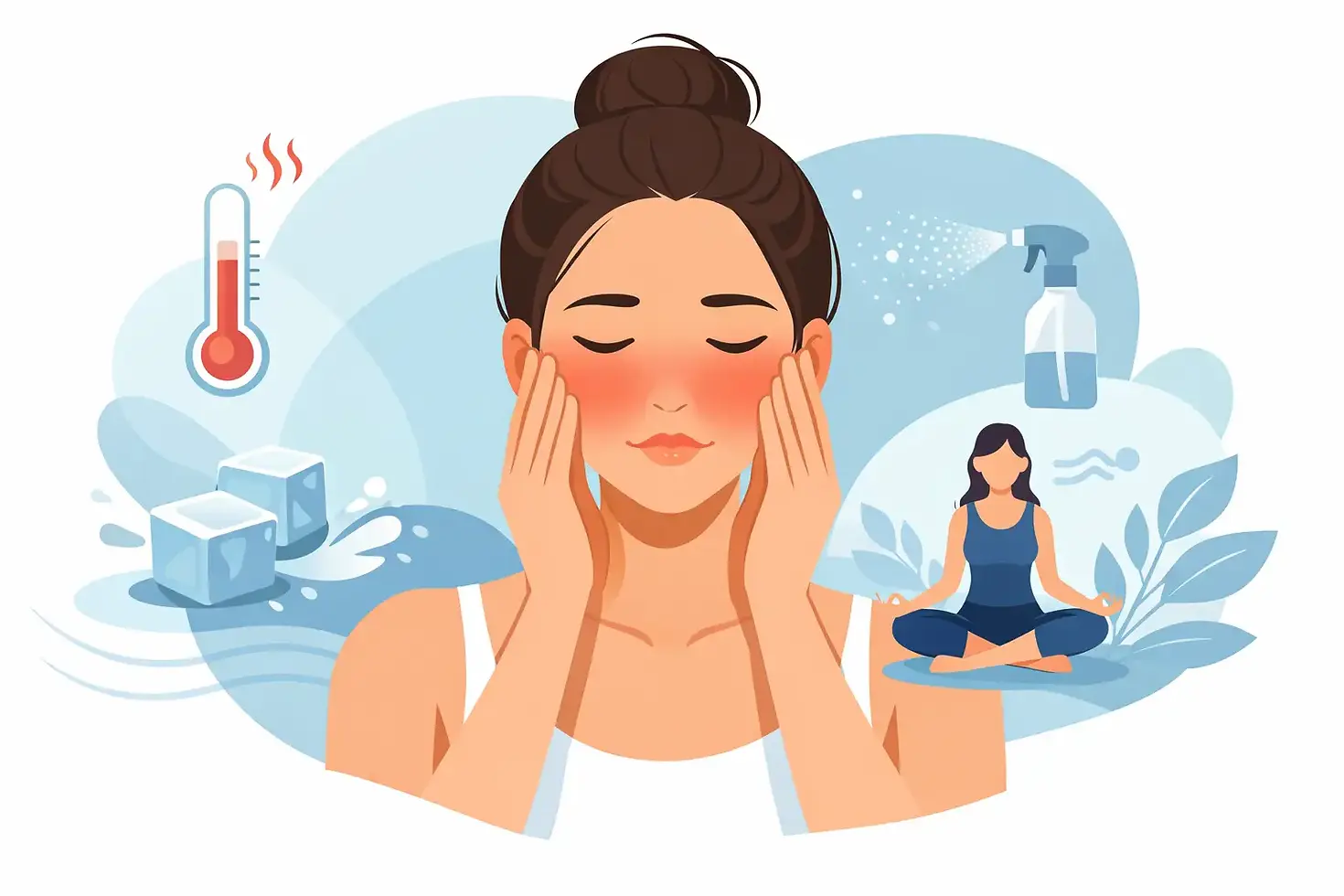
How to Calm Facial Flushing Quickly
- Arilyn Wookey
- 18 hours ago
- 5 min read

A sudden hot, red face can feel impossible to ignore. Whether it shows up after exercise, stress, a glass of wine, spicy food or a flare of rosacea, knowing how to calm facial flushing quickly can help you feel more comfortable and avoid turning a brief flush into lingering irritation.
The first goal is simple - reduce heat in the skin without shocking or aggravating it. The second is to work out whether your flushing is occasional and trigger-based, or part of a more persistent pattern that needs professional support. That distinction matters, because the fastest fix is not always the right long-term one.
How to calm facial flushing quickly at home
When your face is actively flushing, think cool, calm and minimal. A soft compress with cool water is one of the best places to start. Cool means cool, not icy. Very cold temperatures can trigger more vasodilation in some people once the skin rewarms, which may leave you redder than before.
Press the compress gently against the cheeks, nose or forehead for a few minutes at a time. Avoid rubbing. Friction adds heat, increases circulation and can make already reactive skin feel tight and stingy.
If you are indoors, move away from direct sun, heaters or a steamy bathroom and let your body temperature settle. Loosen tight clothing around the neck, sip cool water and give your skin a break from makeup if possible. If you have just exercised, a gradual cool-down is usually better than going straight from very hot to very cold.
A bland, fragrance-free moisturiser can also help if your skin feels dry or prickly during a flush. The key is choosing something simple that supports the barrier rather than a product packed with strong actives. On a flushed face, even skincare you usually tolerate well can suddenly feel like too much.
What not to do when your face is flushing
The quickest way to prolong flushing is to throw too many products at it. Acids, retinol, scrubs, cleansing brushes and heavily fragranced creams are best avoided until the skin feels settled again. If your face is hot and red, this is not the moment for a "deep clean".
It is also wise to skip very hot showers, saunas and vigorous massage over the face while the flush is active. These all increase heat and circulation. The same goes for trying to cover the redness with layer after layer of makeup straight away. Sometimes less is kinder.
Ice is another common mistake. It sounds helpful, but direct ice can irritate the skin, damage delicate capillaries and create more sensitivity. Gentle cooling is far safer than extreme cooling.
Why facial flushing happens so fast
Facial flushing usually happens when blood vessels in the skin widen quickly. That can be triggered by body temperature changes, emotion, alcohol, spicy foods, embarrassment, stress, certain medications or inflammatory skin conditions such as rosacea.
For some people, flushing is brief and predictable. For others, the skin becomes progressively more reactive over time. If you notice that episodes are happening more often, lasting longer or starting with less obvious triggers, your skin may be moving beyond simple temporary flushing and into a more sensitised state.
This is where context matters. A flushed face after a hard workout on a warm Perth day is not the same as daily redness, visible capillaries and skin that stings when you apply basic skincare. One may settle with straightforward home care. The other deserves a closer look.
Common triggers worth noticing
If you often wonder why your skin suddenly turns red, keep track of what happened in the hour beforehand. Heat is a major one, including weather, hot drinks, hot showers and exercise. Food and drink can play a part too, especially alcohol and spicy meals.
Stress is another big trigger, and it is often underestimated. When the nervous system is under pressure, the skin can reflect it very quickly. Hormonal shifts, some supplements and active skincare can also contribute.
You do not need to become obsessed with tracking every variable. But noticing patterns can be useful, especially if your flushing is starting to affect confidence or daily comfort.
If flushing is linked to rosacea or sensitive skin
Rosacea-prone skin needs a gentler approach. If this sounds like you, focus on reducing flare intensity rather than chasing a dramatic overnight fix. Skin with rosacea often reacts badly to extremes, so the best approach is usually consistent and soothing rather than aggressive.
Use a non-foaming cleanser, tepid water and a moisturiser designed for sensitive skin. Ingredients that support the barrier can help the skin become less reactive over time, but introducing too many new products at once often backfires. It is better to keep your routine pared back and stable.
Sun exposure is a particularly common driver of flushing in rosacea-prone skin. Daily sun protection matters, but formula choice matters too. If sunscreen stings or feels heavy, you are less likely to use enough. A well-tolerated, calming formula is far more helpful than one that sits untouched in the bathroom cupboard.
When quick relief is not enough
If you need to calm facial flushing quickly more than occasionally, it is worth asking why it keeps happening. Frequent flushing can be one of the earliest signs that the skin barrier is impaired or that rosacea is developing. It can also be linked to overuse of active products, in-clinic treatments that were too strong for your skin, or a routine that is simply not right for your current condition.
This is where personalised advice makes a difference. The right plan depends on whether your redness is driven by heat, inflammation, sensitivity, broken capillaries or a combination of factors. What calms one person’s skin may irritate another’s.
Professional support can help you identify triggers, simplify your home care and choose treatments that reduce reactivity without stripping the skin. For many clients, the biggest relief is finally understanding what to stop doing.
Building a routine that prevents repeat flushing
Prevention is rarely as dramatic as a quick fix, but it is what changes the skin over time. Start with a gentle cleanser, a moisturiser that reinforces the skin barrier and daily broad-spectrum SPF. If your skin flushes easily, introduce active ingredients slowly and only when there is a clear reason to use them.
Be careful with exfoliation. Many people with redness-prone skin are unintentionally over-exfoliating in the hope of making the skin look smoother or brighter. Instead, they end up with more heat, more sting and more flushing. Less often gives better results.
Temperature awareness helps too. Lukewarm water, moderate exercise intensity and simple cooling strategies after activity can all make a noticeable difference. If alcohol, chilli, stress or sun are obvious triggers for you, reducing the frequency or intensity of those exposures may lower the number of flare-ups.
A calm skin routine should still be results-driven. You do not have to choose between corrective skincare and comfort, but timing and formulation matter. If your skin is in a reactive phase, settle it first. Progress usually comes faster when the barrier is healthy.
When to seek professional advice
Flushing that is painful, persistent or paired with bumps, burning, visible capillaries or increasing sensitivity should not be ignored. The same applies if your skincare suddenly starts stinging when it never used to, or if your redness is affecting your confidence in social or work settings.
A professional assessment can help rule out whether you are dealing with temporary flushing, sensitised skin or a condition such as rosacea. In a clinic setting, the focus should be on calming inflammation, protecting the barrier and creating a treatment plan your skin can actually tolerate.
At Salt Washed, this is often where clients feel most reassured - not because there is a one-size-fits-all answer, but because their skin is finally being read properly. Good skin treatment should feel supportive as well as effective.
Facial flushing can be frustrating, but it is also useful information. Your skin is telling you when something feels too hot, too strong or too much. The more gently you respond, the easier it becomes to calm the redness now and build a skin routine that feels steadier over time.


Comments